Virgin Airlines: Powered by Pond Scum?
Virgin founder Richard Branson has set out to create a viable biofuel. Will his ecofriendly venture take off?
Bruce Falconer
January 22 , 2008
Before meeting with Al Gore over breakfast in 2006, Richard Branson, the swashbuckling founder of Virgin Ltd., an amalgam of over 200 companies sharing the Virgin brand, was long a global warming skeptic. But then the former vice president (and recent recipient of the Nobel Peace Prize for his work to combat climate change) spent two hours at the billionaire entrepreneur's home laying out his case. "Sadly, I'm now convinced that the world has a serious problem," he told ABC's Good Morning America that September with Gore at his side. Joining the former vice president in his environmental crusade, Branson pledged to funnel all profits from his rail and airline holdings over the next 10 years—an estimated $3 billion—into developing a non-ethanol-based, sustainable biofuel to power the world's cars, trains, and airplanes. Last fall, he and Gore went on to establish the Virgin Earth Challenge, a $25 million award for the development of technology that can suck greenhouse gases from the atmosphere for 10 consecutive years and "contribute materially to the stability of Earth's climate."
Since his green awakening, Branson's flagship airline, Virgin Atlantic, has partnered with Boeing and General Electric to turn its owner's vision into reality. Last week, Virgin announced plans to test fly a Boeing 747-400 from London to Amsterdam using a blend of about 20 percent biofuel and 80 percent jet fuel. The flight, set for late February, will be the world's first in-air test of a biofuel by a commercial jet. The composition of the fuel remains a mystery—though some have suggested it could be anything from tree nuts to pond algae—and it remains to be seen whether this is an another Branson PR stunt or a true precursor to an industry-wide change.
According to Virgin spokeswoman Polly Durant, the company "sees this demo flight as the first step on the road toward a more sustainable fuel source for aviation" and hopes that in the future it will allow Virgin's fleet "to operate more efficiently."
"Efficiency" is a buzzword in the aviation business, shorthand for cutting costs and increasing profits. There are different ways to approach it, explains Steve Lott, a spokesman for the Montreal-based International Air Transport Association (IATA), an industry trade group. "With fuel flirting with $100 per barrel, it's in the airline industry's best interest to reduce fuel consumption as much as possible," he says. Many airlines now taxi on one engine and use external power sources at the gate. Others have invested in fuel-efficient ground vehicles and have installed winglets (short, vertical wing extensions) to reduce drag and fuel consumption at altitude. Commercial fleets have also begun replacing aging aircraft with newer, "gas-sipping" models.
Nevertheless, Branson's gamble to replace traditional jet fuel with an organic substitute ventures beyond what most other airlines have been willing to undertake. (Air New Zealand plans to conduct a similar biofuel test later this year.) After all, the industry is a relatively minor greenhouse offender. At the current rate of growth, aviation could produce 3 percent of global CO2 emissions by 2050 and today accounts for 2 percent, according to the UN's Intergovernmental Panel on Climate Change. IATA claims the industry can become 25 percent more fuel efficient by 2020 simply by tweaking airline operations, improving existing infrastructure, and streamlining air traffic control. The group has set a 50-year goal for the industry to become carbon neutral.
Branson wants to do it sooner than that and has committed himself to halting global warming with all the zeal of a recent convert. According to Lott, Branson also sees an opportunity to do well by doing good. "He wants to start his own fuel company," Lott says. "There has to be an economic incentive…because there's a huge R&D investment in this stuff."
The challenge is to move beyond what scientists call "first generation biofuels," such as corn, soy, or palm oil. "If you're going to make fuel from those types of sources, you're competing with food and freshwater resources, and potentially [causing] some deforestation in order to clear ground to plant those crops," says Boeing spokesman Terrance Scott. Instead, in its work with Branson and Virgin Atlantic, Boeing has sought to identify "second generation biofuels," which would step beyond the food-based alternative fuels currently in use, like corn-derived ethanol, toward a more sustainable, long-term substitute for petroleum. The idea is to build a stable of different biofuel sources from around the world—what Boeing calls "regional solutions"—that would work interchangeably and within the existing aviation infrastructure. "It has to perform in the same manner that current jet aviation fuel performs in," says Scott.
Neither Virgin nor its partners, Boeing and GE, will say what biofuel the airline plans to use. Scott attributed the silence to "customer preference," indicating that more information could be released in the coming weeks. For now, he would say only that Boeing is investigating more than 20 different "feedstocks" for the production of biofuels, including a flowering plant called jatropha, canola, and the Brazilian babassu nut—all of which yield oils when crushed.
Another potential fuel source, one that Scott alluded to several times, is algae. "The biggest thing you get out of going to biofuels is the ability to reduce CO2 as the plants are growing," he explained. And along those lines, perhaps more than any other feedstock, algae represents a kind of holy grail to biofuel researchers. It's a fast-growing, hardy, single-celled organism that takes in carbon dioxide and nitrous oxide and releases oxygen, producing oil, sugar, and protein in the process. It's biodegradable, can grow in harsh weather, and holds an estimated thirty times more energy per acre than land-based feedstocks. The Energy Department estimated it would require 15,000 acres (an area about the size of Maryland) to grow enough algae to replace all of America's petroleum needs; it would require half the continental United States to accomplish the same with soy.
"It's incredible, partly because you get a twofer out of it," explains Deron Lovaas, director of the Move America Beyond Oil Campaign at the Natural Resources Defense Council, an environmental watchdog group. "You grow the algae thanks, in part, to carbon dioxide captured from smoke stacks, so you reduce pollution in the smoke stack. And you get a bunch of fuel derived from algae, so you end up displacing oil."
Pond scum as fuel is not a new concept. The federal government first invested in developing the technology in the mid-1970s in response to an oil crisis that sparked a sudden rise in the price of gas for American drivers. But as prices came down, so did the political dividends of pushing alternative fuels, and by 1996, federal budget cuts killed the program. Since then, as oil prices have resumed their upward climb, algae research has transferred to the private sector, where a dozen companies are now racing to transform muck into fuel. Just last year, Boeing demonstrated in a laboratory that, unlike ethanol, algae-derived fuel does not freeze at high altitudes, removing an important obstacle to future airborne testing. Another important difference from ethanol, says Scott, is that "you're not taking food off the table if you're talking about pond scum."
Would it be unrealistic to expect that Virgin Atlantic might test an algae-derived fuel next month? "No," Lovaas said. "That would not shock me. That would be amazing! It would be a breakthrough development if they were able to do this…a big step forward, even a leap forward, and a tribute to Lord Branson." But even if it turns out not to be algae, "what Virgin and Boeing are doing deserves praise," he added. "This is exactly what the whole industry should be looking at."
Bruce Falconer is a reporter in Mother Jones' Washington, D.C., bureau.
Via Jerry

Affichage des articles dont le libellé est sustainability. Afficher tous les articles
Affichage des articles dont le libellé est sustainability. Afficher tous les articles
mercredi, janvier 23, 2008
algae, the holy grail ...
Very, very cool. Powering the country with pond scum is an awesome twofer.


lundi, janvier 21, 2008
quotable
"Sustainability is not compatible with empire."
-David Roberts, primary staff writer for Grist Magazine, an online environmental publication based in Seattle, Washington.
mardi, décembre 11, 2007
google earth from above
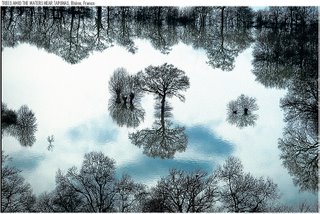
I love Yann Arthus-Bertrand's photography. His "Earth From Above" work is stunning, beautiful, and thought-provoking. I'm glad to see Google Earth incorporating it.
Official Google Blog: Earth From Above
French photographer Yann Arthus-Bertrand's beautiful images of the planet have become a coffee table favorite across the world. Today we are excited to present a new Google Earth layer of nearly 500 of his images, many taken from hot air balloons and all taken from above the earth. Each image is paired with thought-provoking statistics about the current environmental situation they depict. The facts and figures were put together by GoodPlanet.org, Yann's non-profit organization established to promote environmental awareness and sustainable development.
In June this year, we launched Google Earth Outreach, a program to empower non-profit groups with resources and tools to use Google Earth to promote their cause. Today's new "Earth From Above" layer (located in the Global Awareness folder in Google Earth) is an excellent example of what such groups can accomplish.
Not only can you enjoy these stunning new photographs on Google Earth -- we're also launching an iGoogle gadget you can add to your personalized Google homepage to see a different image each day. You can find the iGoogle gadget and a YouTube interview with Yann here. We hope you enjoy them!
 |  |
 |  |
 |  |
vendredi, novembre 02, 2007
things you learn while browsing marthastewart.com
I once talked about Martha on national television. (It was with Alex Trebek during my 1.2 seconds of fame as a Jeopardy! contestant.)
Yesterday, some healthy recipes from Body+Soul were featured in an e-mail I got and before I knew it, I'd spent twenty minutes exploring the site's sustainability-oriented content. Who knew that Martha was cashing in on the enviro/hippie-dippy segment with features like this going green checklist: 101 ways to get started?
Anyhow, I've known for awhile that phosphates are evil. I just didn't realize how crazy all the ingredients are that go into our laundry products. Check it out ... and you'll quit using Tide, fabric softener, and all those other things that make fresh laundry smell so good.
Yesterday, some healthy recipes from Body+Soul were featured in an e-mail I got and before I knew it, I'd spent twenty minutes exploring the site's sustainability-oriented content. Who knew that Martha was cashing in on the enviro/hippie-dippy segment with features like this going green checklist: 101 ways to get started?
Anyhow, I've known for awhile that phosphates are evil. I just didn't realize how crazy all the ingredients are that go into our laundry products. Check it out ... and you'll quit using Tide, fabric softener, and all those other things that make fresh laundry smell so good.
Lighten Your Load
"After ecstasy, the laundry," a Zen philosopher once mused. These days, the weekly wash may hit you with more than the soiled thud of earthly reality due to the chemicals packed into many common detergents. Each of the 35 billion loads washed annually by American households contributes a mounting dose of irritants and pollutants to the environment -- but they don't have to. With a growing selection of eco- and health-friendly alternatives, you can find a gentle, easy, and effective "green" clean. Exact compositions of detergents are protected trade secrets, so product labels often reveal little more than chemical acronyms and cautions to "keep out of reach of children." To help you make optimal selections for your family and home, we've listed the benefits and costs of common laundry products, as well as our picks from the greener alternatives.
Conventional Detergents
Petrochemical-based synthetic detergents replaced flaked soap on supermarket and laundry-room shelves in the 1940s. Heavily marketed and quite effective, they quickly became the standard choice for American households. These detergents remove dirt and oils, rinsing them off so they don't settle back into the fabric, and they leave no mineral residue, even in hard water. Companies offer a wide-ranging palette of scents by using synthetic fragrances. And with powerful chemical preservatives, these products have a shelf-life that's essentially unlimited.
Conventional detergents do have their drawbacks, however, starting with the fact that they use nonrenewable resources -- among them, the petroleum-based optical brighteners found in many products. These potentially toxic "fluorescent whitening agents" make clothes appear whiter by attaching to fabrics and converting UV rays into visible blue-violet light. Some manufacturers will list these as "brighteners," or the trade names ER, KSN, OB, and OB-1. Often not on the labels of these detergents are the dyes, perfumes, softeners, enzymes, or bleaching agents the products may contain. Fragrance, for instance, often helps disguise the chemical smell of a detergent, even if the box says "hypoallergenic" or "fragrance-free"; these claims aren't regulated by any government committee or standards organization.
The extent to which conventional detergents compromise our health remains another cause for concern. These products are formulated to cling to clothes, rather than rinse out, placing harsh ingredients in prolonged contact with the skin, stripping it of moisture. They sometimes include synthetic surfactants, cleaning agents that biodegrade slowly and are associated with chronic health problems. Petrochemical-based surfactants called alkylphenol ethoxylates (APEs) can break down to compounds that the Environmental Protection Agency considers highly toxic to aquatic organisms and potential "endocrine disruptors" for humans. This means they could harm your body's endocrine system, which is responsible for healthy metabolism, reproduction, and growth. Another chemical group, phthalates (indicated by nonspecific "fragrance" on many labels), is readily absorbed by skin, fingernails, and lungs, and they may cause birth defects. Finally, most conventional detergents include parabens, or chemical preservatives that can accumulate in the body with use and have been detected in breast cancer tumors. While early studies on the link between parabens and breast cancer have been inconclusive, some health experts still advise caution.
Vegetable-Based Detergents
For their part, formulators of ecofriendly vegetable-based detergents have made major strides in recent years to achieve the strengths of conventional cleaners, without sacrificing responsibility to the environment and good health. In general, these detergents minimize pollution and residues by using renewable plant resources: Rather than tapping crude oil, their surfactants use vegetable oils, often from coconut. They won't attach to textiles (so you're not in constant contact with chemicals), and they're paraben-free. While risks associated with parabens are still unknown, these manufacturers opt for alternatives that are less questionable.
Of course, not all vegetable-based detergents will please everyone. Some contain strong fragrances that may aggravate allergies. Others can harbor unlisted additives, like their conventional counterparts. When hunting for alternatives, look for labels that state the origin of their scents and surfactants: "coconut-oil-based surfactant," for instance, instead of "cleaning agents," and "fragrance derived from lavender oil" rather than "fragrance." While we've found effective detergents from several brands (see "Detergents Put to the Test"), it's worth conducting your own tests, which will take into account your most common laundry dilemmas, as well as the type of water in which you wash your clothes. Find a detergent you like, and you can give those whites and brights a healthy hint of "green."
Learn more healthy laundry practices in our guide to better bleaches.
What About Softeners?Many textile and cleaning experts advise against using synthetic fabric softeners altogether, especially for those items you want to remain absorbent or nonirritating to sensitive skin. That's because conventional softeners generate their namesake feel with a waxy chemical residue that attaches to your garments and can build up over time. This can inhibit towels and "wicking" athletic wear from serving their functions. The same innovation that allows a softener to enhance comfort and control static cling between washes keeps your body in close, constant contact with its potentially harmful ingredients.
In addition, most softeners contain derivatives of ammonium chloride, a chemical that is deadly to some aquatic life and a common trigger for allergy and asthma symptoms, including difficulty breathing, congestion, and watery eyes. Many softeners also contain tallow, or animal fat, making them undesirable to vegans and other people trying to avoid animal products. Fortunately, you can choose from a variety of gentler alternatives, some of which you may already stock in your kitchen. A quarter to one cup of white vinegar added to a final rinse (after any chlorine products have been washed away to avoid dangerous fumes) can help to fluff, deodorize, and prevent lint, and a quarter cup of baking soda added to the wash cycle can help to reduce static cling.
vendredi, juillet 27, 2007
message in a bottle

Fact: Americans spent more money last year on bottled water than on ipods or movie tickets ($15 Billion).San Diego tap water is hard. (You can taste the minerals.)
Fact: 24% of the bottled water we buy is tap water repackaged by Coke and Pepsi. Think Outside the Bottle has been somewhat successful in getting water bottlers to indicate the source of the water, especially when the mountains and pristine glaciers on the bottle might lead us to think that that's where the water came from.
Fact: We pitch into landfills 38 billion water bottles a year — in excess of $1 billion worth of plastic.
Fact: Worldwide, 1 billion people have no reliable source of drinking water; 3,000 children a day die from diseases caught from tainted water.
I usually drink water instead of juice, soda, or tea. (I don't drink coffee.) So at home, I drink bottled water that's been through a Reverse Osmosis, Ozonation, Carbon Filtration, Ultra-Violet Lighting, and other filtration process, courtesy of the Water Lady. I usually fill my Nalgene or glass with this, but I do sometimes buy bottles of single-serving size water and recycle the empty bottle. But I can honestly say that I had no idea what the collective impact of bottled water is.
Message in a Bottle
From: Issue 117 | July 2007 | Page 110 | By: Charles Fishman
The largest bottled-water factory in North America is located on the outskirts of Hollis, Maine. In the back of the plant stretches the staging area for finished product: 24 million bottles of Poland Spring water. As far as the eye can see, there are double-stacked pallets packed with half-pint bottles, half-liters, liters, "Aquapods" for school lunches, and 2.5-gallon jugs for the refrigerator.
Really, it is a lake of Poland Spring water, conveniently celled off in plastic, extending across 6 acres, 8 feet high. A week ago, the lake was still underground; within five days, it will all be gone, to supermarkets and convenience stores across the Northeast, replaced by another lake's worth of bottles.
Looking at the piles of water, you can have only one thought: Americans sure are thirsty.
Bottled water has become the indispensable prop in our lives and our culture. It starts the day in lunch boxes; it goes to every meeting, lecture hall, and soccer match; it's in our cubicles at work; in the cup holder of the treadmill at the gym; and it's rattling around half-finished on the floor of every minivan in America. Fiji Water shows up on the ABC show Brothers & Sisters; Poland Spring cameos routinely on NBC's The Office. Every hotel room offers bottled water for sale, alongside the increasingly ignored ice bucket and drinking glasses. At Whole Foods, the upscale emporium of the organic and exotic, bottled water is the number-one item by units sold.
Thirty years ago, bottled water barely existed as a business in the United States. Last year, we spent more on Poland Spring, Fiji Water, Evian, Aquafina, and Dasani than we spent on iPods or movie tickets--$15 billion. It will be $16 billion this year.
Bottled water is the food phenomenon of our times. We--a generation raised on tap water and water fountains--drink a billion bottles of water a week, and we're raising a generation that views tap water with disdain and water fountains with suspicion. We've come to pay good money--two or three or four times the cost of gasoline--for a product we have always gotten, and can still get, for free, from taps in our homes.
When we buy a bottle of water, what we're often buying is the bottle itself, as much as the water. We're buying the convenience--a bottle at the 7-Eleven isn't the same product as tap water, any more than a cup of coffee at Starbucks is the same as a cup of coffee from the Krups machine on your kitchen counter. And we're buying the artful story the water companies tell us about the water: where it comes from, how healthy it is, what it says about us. Surely among the choices we can make, bottled water isn't just good, it's positively virtuous.
Except for this: Bottled water is often simply an indulgence, and despite the stories we tell ourselves, it is not a benign indulgence. We're moving 1 billion bottles of water around a week in ships, trains, and trucks in the United States alone. That's a weekly convoy equivalent to 37,800 18-wheelers delivering water. (Water weighs 81/3 pounds a gallon. It's so heavy you can't fill an 18-wheeler with bottled water--you have to leave empty space.)
Meanwhile, one out of six people in the world has no dependable, safe drinking water. The global economy has contrived to deny the most fundamental element of life to 1 billion people, while delivering to us an array of water "varieties" from around the globe, not one of which we actually need. That tension is only complicated by the fact that if we suddenly decided not to purchase the lake of Poland Spring water in Hollis, Maine, none of that water would find its way to people who really are thirsty.
A chilled plastic bottle of water in the convenience-store cooler is the perfect symbol of this moment in American commerce and culture. It acknowledges our demand for instant gratification, our vanity, our token concern for health. Its packaging and transport depend entirely on cheap fossil fuel. Yes, it's just a bottle of water--modest compared with the indulgence of driving a Hummer. But when a whole industry grows up around supplying us with something we don't need--when a whole industry is built on the packaging and the presentation--it's worth asking how that happened, and what the impact is. And if you do ask, if you trace both the water and the business back to where they came from, you find a story more complicated, more bemusing, and ultimately more sobering than the bottles we tote everywhere suggest.
In the town of San Pellegrino Terme, Italy, for example, is a spigot that runs all the time, providing San Pellegrino water free to the local citizens--except the free Pellegrino has no bubbles. Pellegrino trucks in the bubbles for the bottling plant. The man who first brought bottled water to the United States famously failed an impromptu taste test involving his own product. In Maine, there is a marble temple to honor our passion for bottled water.
And in Fiji, a state-of-the-art factory spins out more than a million bottles a day of the hippest bottled water on the U.S. market today, while more than half the people in Fiji do not have safe, reliable drinking water. Which means it is easier for the typical American in Beverly Hills or Baltimore to get a drink of safe, pure, refreshing Fiji water than it is for most people in Fiji.
At the Peninsula hotel in Beverly Hills, where the rooms start at $500 a night and the guest next door might well be an Oscar winner, the minibar in all 196 rooms contains six bottles of Fiji Water. Before Fiji Water displaced Evian, Diet Coke was the number-one-selling minibar item. Now, says Christian Boyens, the Peninsula's elegant director of food and beverage, "the 1 liter of Fiji Water is number one. Diet Coke is number two. And the 500-milliliter bottle of Fiji is number three."
Being the water in the Peninsula minibar is so desirable--not just for the money to be made, but for the exposure with the Peninsula's clientele--that Boyens gets a sales call a week from a company trying to dislodge Fiji.
Boyens, who has an MBA from Cornell, used to be indifferent to water. Not anymore. His restaurants and bars carry 20 different waters. "Sometimes a guest will ask for Poland Spring, and you can't get Poland Spring in California," he says. So what does he do? "We'll call the Peninsula in New York and have them FedEx out a case.
"I thought water was water. But our customers know what they want."
The marketing of bottled water is subtle compared with the marketing of, say, soft drinks or beer. The point of Fiji Water in the minibar at the Peninsula, or at the center of the table in a white-tablecloth restaurant, is that guests will try it, love it, and buy it at a store the next time they see it.
Which isn't difficult, because the water aisle in a suburban supermarket typically stocks a dozen brands of water--not including those enhanced with flavors or vitamins or, yes, oxygen. In 1976, the average American drank 1.6 gallons of bottled water a year, according to Beverage Marketing Corp. Last year, we each drank 28.3 gallons of bottled water--18 half-liter bottles a month. We drink more bottled water than milk, or coffee, or beer. Only carbonated soft drinks are more popular than bottled water, at 52.9 gallons annually.
No one has experienced this transformation more profoundly than Kim Jeffery. Jeffery began his career in the water business in the Midwest in 1978, selling Perrier ("People didn't know whether to put it in their lawn mower or drink it," he says). Now he's the CEO of Nestlé Waters North America, in charge of U.S. sales of Perrier, San Pellegrino, Poland Spring, and a portfolio of other regional natural springwaters. Combined, his brands will sell some $4.5 billion worth of water this year (generating roughly $500 million in pretax profit). Jeffery insists that unlike the soda business, which is stoked by imaginative TV and marketing campaigns, the mainstream water business is, quite simply, "a force of nature."
"The entire bottled-water business today is half the size of the carbonated beverage industry," says Jeffery, "but our marketing budget is 15% of what they spend. When you put a bottle of water in that cold box, it's the most thirst-quenching beverage there is. There's nothing in it that's not good for you. People just know that intuitively.
"A lot of people tell me, you guys have done some great marketing to get customers to pay for water," Jeffery says. "But we aren't that smart. We had to have a hell of a lot of help from the consumer."
Still, we needed help learning to drink bottled water. For that, we can thank the French.
Gustave Leven was the chairman of Source Perrier when he approached an American named Bruce Nevins in 1976. Nevins was working for the athletic-wear company Pony. Leven was a major Pony investor. "He wanted me to consider the water business in the U.S.," Nevins says. "I was a bit reluctant." Back then, the American water industry was small and fusty, built on home and office delivery of big bottles and grocery sales of gallon jugs.
Nevins looked out across 1970s America, though, and had an epiphany: Perrier wasn't just water. It was a beverage. The opportunity was in persuading people to drink Perrier when they would otherwise have had a cocktail or a Coke. Americans were already drinking 30 gallons of soft drinks each a year, and the three-martini lunch was increasingly viewed as a problem. Nevins saw a niche.
From the start, Nevins pioneered a three-part strategy. First, he connected bottled water to exclusivity: In 1977, just before Perrier's U.S. launch, he flew 60 journalists to France to visit "the source" where Perrier bubbled out of the ground. He connected Perrier to health, sponsoring the New York City Marathon, just as long-distance running was exploding as a fad across America. And he associated Perrier with celebrity, launching with $4 million in TV commercials featuring Orson Welles. It worked. In 1978, its first full year in the United States, Perrier sold $20 million of water. The next year, sales tripled to $60 million.
What made Perrier distinctive was that it was a sparkling water, served in a signature glass bottle. But that's also what left the door open for Evian, which came to the United States in 1984. Evian's U.S. marketing was built around images of toned young men and women in tight clothes sweating at the gym. Madonna drank Evian--often onstage at concerts. "If you were cool, you were drinking bottled water," says Ed Slade, who became Evian's vice president of marketing in 1990. "It was a status symbol."
Evian was also a still water, which Americans prefer; and it was the first to offer a plastic bottle nationwide. The clear bottle allowed us to see the water--how clean and refreshing it looked on the shelf. Americans have never wanted water in cans, which suggest a tinny aftertaste before you take a sip. The plastic bottle, in fact, did for water what the pop-top can had done for soda: It turned water into an anywhere, anytime beverage, at just the moment when we decided we wanted a beverage, everywhere, all the time.
Perrier and Evian launched the bottled-water business just as it would prove irresistible. Convenience and virtue aligned. Two-career families, overprogrammed children, prepared foods in place of home-cooked meals, the constant urging to eat more healthfully and drink less alcohol--all reinforce the value of bottled water. But those trends also reinforce the mythology.
We buy bottled water because we think it's healthy. Which it is, of course: Every 12-year-old who buys a bottle of water from a vending machine instead of a 16-ounce Coke is inarguably making a healthier choice. But bottled water isn't healthier, or safer, than tap water. Indeed, while the United States is the single biggest consumer in the world's $50 billion bottled-water market, it is the only one of the top four--the others are Brazil, China, and Mexico--that has universally reliable tap water. Tap water in this country, with rare exceptions, is impressively safe. It is monitored constantly, and the test results made public. Mineral water has a long association with medicinal benefits--and it can provide minerals that people need--but there are no scientific studies establishing that routinely consuming mineral water improves your health. The FDA, in fact, forbids mineral waters in the United States from making any health claims.
And for this healthy convenience, we're paying what amounts to an unbelievable premium. You can buy a half- liter Evian for $1.35--17 ounces of water imported from France for pocket change. That water seems cheap, but only because we aren't paying attention.
In San Francisco, the municipal water comes from inside Yosemite National Park. It's so good the EPA doesn't require San Francisco to filter it. If you bought and drank a bottle of Evian, you could refill that bottle once a day for 10 years, 5 months, and 21 days with San Francisco tap water before that water would cost $1.35. Put another way, if the water we use at home cost what even cheap bottled water costs, our monthly water bills would run $9,000.
Taste, of course, is highly personal. New Yorkers excepted, Americans love to belittle the quality of their tap water. But in blind taste tests, with waters at equal temperatures, presented in identical glasses, ordinary people can rarely distinguish between tap water, springwater, and luxury waters. At the height of Perrier's popularity, Bruce Nevins was asked on a live network radio show one morning to pick Perrier from a lineup of seven carbonated waters served in paper cups. It took him five tries.
We are actually in the midst of a second love affair with bottled water. In the United States, many of the earliest, still-familiar brands of springwater--Poland Spring, Saratoga Springs, Deer Park, Arrowhead--were originally associated with resort and spa complexes. The water itself, pure at a time when cities struggled to provide safe water, was the source of the enterprise.
In the late 1800s, Poland Spring was already a renowned brand of healthful drinking water that you could get home-delivered in Boston, New York, Philadelphia, or Chicago. It was also a sprawling summer resort complex, with thousands of guests and three Victorian hotels, some of which had bathtubs with spigots that allowed guests to bathe in Poland Spring water. The resort burned in 1976, but at the crest of a hill in Poland Spring, Maine, you can still visit a marble-and-granite temple built in 1906 to house the original spring.
24% of the bottled water we buy is tap water repackaged by Coke and Pepsi.
The car, the Depression, World War II, and perhaps most important, clean, safe municipal water, unwound the resorts and the first wave of water as business. We had to wait two generations for the second, which would turn out to be much different--and much larger.
Today, for all the apparent variety on the shelf, bottled water is dominated in the United States and worldwide by four huge companies. Pepsi has the nation's number-one-selling bottled water, Aquafina, with 13% of the market. Coke's Dasani is number two, with 11% of the market. Both are simply purified municipal water--so 24% of the bottled water we buy is tap water repackaged by Coke and Pepsi for our convenience. Evian is owned by Danone, the French food giant, and distributed in the United States by Coke.
The really big water company in the United States is Nestlé, which gradually bought up the nation's heritage brands, and expanded them. The waters are slightly different--springwater must come from actual springs, identified specifically on the label--but together, they add up to 26% of the market, according to Beverage Marketing, surpassing Coke and Pepsi's brands combined.
Since most water brands are owned by larger companies, it's hard to get directly at the economics. But according to those inside the business, half the price of a typical $1.29 bottle goes to the retailer. As much as a third goes to the distributor and transport. Another 12 to 15 cents is the cost of the water itself, the bottle and the cap. That leaves roughly a dime of profit. On multipacks, that profit is more like 2 cents a bottle.
As the abundance in the supermarket water aisle shows, that business is now trying to help us find new waters to drink and new occasions for drinking them--trying to get more mouth share, as it were. Aquafina marketing vice president Ahad Afridi says his team has done the research to understand what kind of water drinkers we are. They've found six types, including the "water pure-fectionist"; the "water explorer"; the "image seeker"; and the "struggler" ("they don't really like water that much...these are the people who have a cheeseburger with a diet soda").
It's a startling level of thought and analysis--until you realize that within a decade, our consumption of bottled water is expected to surpass soda. That kind of market can't be left to chance. Aquafina's fine segmentation is all about the newest explosion of waters that aren't really water--flavored waters, enhanced waters, colored waters, water drinks branded after everything from Special K breakfast cereal to Tropicana juice.
Afridi is a true believer. He talks about water as if it were more than a drink, more than a product--as if it were a character all its own, a superhero ready to take the pure-fectionist, the water explorer, and the struggler by the hand and carry them to new water adventures. "Water as a beverage has more right to extend and enter into more territories than any other beverage," Afridi says. "Water has a right to travel where others can't."
Uh, meaning what?
"Water that's got vitamins in it. Water that's got some immunity-type benefit to it. Water that helps keep skin younger. Water that gives you energy."
Water: It's pure, it's healthy, it's perfect--and we've made it better. The future of water sounds distinctly unlike water.
The label on a bottle of Fiji Water says "from the islands of Fiji." Journey to the source of that water, and you realize just how extraordinary that promise is. From New York, for instance, it is an 18-hour plane ride west and south (via Los Angeles) almost to Australia, and then a four-hour drive along Fiji's two-lane King's Highway.
Every bottle of Fiji Water goes on its own version of this trip, in reverse, although by truck and ship. In fact, since the plastic for the bottles is shipped to Fiji first, the bottles' journey is even longer. Half the wholesale cost of Fiji Water is transportation--which is to say, it costs as much to ship Fiji Water across the oceans and truck it to warehouses in the United States than it does to extract the water and bottle it.
The bubbles in San Pellegrino are extracted from volcanic springs in Tuscany, then trucked north and injected into the water from the source.
That is not the only environmental cost embedded in each bottle of Fiji Water. The Fiji Water plant is a state-of-the-art facility that runs 24 hours a day. That means it requires an uninterrupted supply of electricity--something the local utility structure cannot support. So the factory supplies its own electricity, with three big generators running on diesel fuel. The water may come from "one of the last pristine ecosystems on earth," as some of the labels say, but out back of the bottling plant is a less pristine ecosystem veiled with a diesel haze.
Each water bottler has its own version of this oxymoron: that something as pure and clean as water leaves a contrail.
San Pellegrino's 1-liter glass bottles--so much a part of the mystique of the water itself--weigh five times what plastic bottles weigh, dramatically adding to freight costs and energy consumption. The bottles are washed and rinsed, with mineral water, before being filled with sparkling Pellegrino--it uses up 2 liters of water to prepare the bottle for the liter we buy. The bubbles in San Pellegrino come naturally from the ground, as the label says, but not at the San Pellegrino source. Pellegrino chooses its CO2 carefully--it is extracted from supercarbonated volcanic springwaters in Tuscany, then trucked north and bubbled into Pellegrino.
Poland Spring may not have any oceans to traverse, but it still must be trucked hundreds of miles from Maine to markets and convenience stores across its territory in the northeast--it is 312 miles from the Hollis plant to midtown Manhattan. Our desire for Poland Spring has outgrown the springs at Poland Spring's two Maine plants; the company runs a fleet of 80 silver tanker trucks that continuously crisscross the state of Maine, delivering water from other springs to keep its bottling plants humming.
We pitch into landfills 38 billion water bottles a year--in excess of $1 billion worth of plastic.
In transportation terms, perhaps the waters with the least environmental impact are Pepsi's Aquafina and Coke's Dasani. Both start with municipal water. That allows the companies to use dozens of bottling plants across the nation, reducing how far bottles must be shipped.
Yet Coke and Pepsi add in a new step. They put the local water through an energy-intensive reverse-osmosis filtration process more potent than that used to turn seawater into drinking water. The water they are purifying is ready to drink--they are recleaning perfectly clean tap water. They do it so marketing can brag about the purity, and to provide consistency: So a bottle of Aquafina in Austin and a bottle in Seattle taste the same, regardless of the municipal source.
There is one more item in bottled water's environmental ledger: the bottles themselves. The big springwater companies tend to make their own bottles in their plants, just moments before they are filled with water--12, 19, 30 grams of molded plastic each. Americans went through about 50 billion plastic water bottles last year, 167 for each person. Durable, lightweight containers manufactured just to be discarded. Water bottles are made of totally recyclable polyethylene terephthalate (PET) plastic, so we share responsibility for their impact: Our recycling rate for PET is only 23%, which means we pitch into landfills 38 billion water bottles a year--more than $1 billion worth of plastic.
Some of the water companies are acutely aware that every business, every product, every activity is under environmental scrutiny like never before. Nestlé Waters has just redesigned its half-liter bottle, the most popular size among the 18 billion bottles the company will mold this year, to use less plastic. The lighter bottle and cap require 15 grams of plastic instead of 19 grams, a reduction of 20%. The bottle feels flimsy--it uses half the plastic of Fiji Water's half-liter bottle--and CEO Jeffery says that crushable feeling should be the new standard for bottled-water cachet.
"As we've rolled out the lightweight bottle, people have said, 'Well, that feels cheap,'" says Jeffery. "And that's good. If it feels solid like a Gatorade bottle or a Fiji bottle, that's not so good." Of course, lighter bottles are also cheaper for Nestlé to produce and ship. Good environmentalism equals good business.
John Mackey is the CEO and cofounder of Whole Foods Market, the national organic-and-natural grocery chain. No one thinks about the environmental and social impacts and the larger context of food more incisively than Mackey--so he's a good person to help frame the ethical questions around bottled water.
Mackey and his wife have a water filter at home, and don't typically drink bottled water there. "If I go to a movie," he says, "I'll smuggle in a bottle of filtered water from home. I don't want to buy a Coke there, and why buy another bottle of water--$3 for 16 ounces?" But he does drink bottled water at work: Whole Foods' house brand, 365 Water.
"You can compare bottled water to tap water and reach one set of conclusions," says Mackey, referring both to environmental and social ramifications. "But if you compare it with other packaged beverages, you reach another set of conclusions.
"It's unfair to say bottled water is causing extra plastic in landfills, and it's using energy transporting it," he says. "There's a substitution effect--it's substituting for juices and Coke and Pepsi." Indeed, we still drink almost twice the amount of soda as water--which is, in fact, 90% water and also in containers made to be discarded. If bottled water raises environmental and social issues, don't soft drinks raise all those issues, plus obesity concerns?
What's different about water, of course, is that it runs from taps in our homes, or from fountains in public spaces. Soda does not.
As for the energy used to transport water from overseas, Mackey says it is no more or less wasteful than the energy used to bring merlot from France or coffee from Ethiopia, raspberries from Chile or iPods from China. "Have we now decided that the use of any fossil fuel is somehow unethical?" Mackey asks. "I don't think water should be picked on. Why is the iPod okay and the water is not?"
Mackey's is a merchant's approach to the issue of bottled water--it's a choice for people to make in the market. Princeton University philosopher Peter Singer takes an ethicist's approach. Singer has coauthored two books that grapple specifically with the question of what it means to eat ethically--how responsible are we for the negative impact, even unknowing, of our food choices on the world?
"Where the drinking water is safe, bottled water is simply a superfluous luxury that we should do without," he says. "How is it different than French merlot? One difference is the value of the product, in comparison to the value of transporting and packaging it. It's far lower in the bottled water than in the wine.
"And buying the merlot may help sustain a tradition in the French countryside that we value--a community, a way of life, a set of values that would disappear if we stopped buying French wines. I doubt if you travel to Fiji you would find a tradition of cultivation of Fiji water.
"We're completely thoughtless about handing out $1 for this bottle of water, when there are virtually identical alternatives for free. It's a level of affluence that we just take for granted. What could you do? Put that dollar in a jar on the counter instead, carry a water bottle, and at the end of the month, send all the money to Oxfam or CARE and help someone who has real needs. And you're no worse off."
Beyond culture and the product's value, Singer makes one exception. "You know, they do import Kenyan vegetables by air into London. Fresh peas from Kenya, sent by airplane to London. That provides employment for people who have few opportunities to get themselves out of poverty. So despite the fuel consumption, we're supporting a developing country, we're working against poverty, we're working for global equity.
"Those issues are relevant. Presumably, for instance, bottling water in Fiji is fairly automated. But if there were 10,000 Fijians carefully filtering the water through coconut fiber--well, that would be a better argument for drinking it."
Marika, an elder from the Fijian village of Drauniivi, is sitting cross-legged on a hand-woven mat before a wooden bowl, where his weathered hands are filtering Fiji Water through a long bag of ground kava root. Marika is making a bowl of grog, a lightly narcotic beverage that is an anchor of traditional Fiji society. People with business to conduct sit wearing the traditional Fijian skirt, and drink round after round of grog, served in half a coconut shell, as they discuss the matters at hand.
Marika is using Fiji Water--the same Fiji Water in the minibars of the Peninsula Hotel--because Drauniivi is one of the five rural villages near the Fiji Water bottling plant where the plant's workers live. Drauniivi and Beverly Hills are part of the same bottled-water supply chain.
Jim Siplon, an American who manages Fiji Water's 10-year-old bottling plant in Fiji, has arranged the grog ceremony. "This is the soul of Fiji Water," he says. The ceremony lasts 45 minutes and goes through four rounds of grog, which tastes a little furry. Marika is interrupted twice by his cell phone, which he pulls from a pocket in his skirt. It is shift change at the plant, and Marika coordinates the minibus network that transports villagers to and from work.
Fiji Water is the product of these villages, a South Pacific aquifer, and a state-of-the-art bottling plant in a part of Fiji even the locals consider remote. The plant, on the northeast coast of Fiji's main island of Viti Levu, is a white two-story building that looks like a 1970s-era junior high school. The entrance faces the interior of Viti Levu and a cloud-shrouded ridge of volcanic mountains.
Inside, the plant is in almost every way indistinguishable from Pellegrino's plant in Italy, or Poland Spring's in Hollis, filled with computer-controlled bottle-making and bottle-filling equipment. Line number two can spin out 1 million bottles of Fiji Water a day, enough to load 40 20-foot shipping containers; the factory has three lines.
The plant employs 200 islanders--set to increase to 250 this year--most with just a sixth- or eighth-grade education. Even the entry-level jobs pay twice the informal minimum wage. But these are more than simply jobs--they are jobs in a modern factory, in a place where there aren't jobs of any sort beyond the villages. And the jobs are just part of an ecosystem emerging around the plant--water-based trickle-down economics, as it were.
Siplon, a veteran telecom manager from MCI, wants Fiji Water to feel like a local company in Fiji. (It was purchased in 2004 by privately owned Roll International, which also owns POM Wonderful and is one of the largest producers of nuts in the United States.) He uses a nearby company to print the carrying handles for Fiji Water six-packs and buys engineering services and cardboard boxes on the island. By long-standing arrangement, the plant has seeded a small business in the villages that contracts with the plant to provide landscaping and security, and runs the bus system that Marika helps manage.
In 2007, Fiji Water will mark a milestone. "Even though you can drive for hours and hours on this island past cane fields," says Siplon, "sometime this year, Fiji Water will eclipse sugarcane as the number-one export." That is, the amount of sugar harvested and processed for export by some 40,000 seasonal sugar workers will equal in dollar value the amount of water bottled and shipped by 200 water bottlers.
However we regard Fiji Water in the United States--essential accessory, harmless treat, or frivolous excess--the closer you get to the source of its water, the more significant the enterprise looks.
No, no coconut-fiber filtering, but rather, a toehold in the global economy. Are 10,000 Fijians benefiting? Not directly. Perhaps 2,000. But Fiji Water is providing something else to a tiny nation of 850,000 people, which has been buffeted by two coups in seven years, and the collapse of its gold-mining and textiles industries: inspiration, a vision of what the country might have to offer the rest of the world. Developed countries are keen for myriad variations on just what Fiji Water is--a pure, unadulterated, organic, and natural product. Fiji has whole vistas of untouched, organic-ready farmland. Indeed, the hottest topic this spring (beyond politics) was how to jump-start an organic-sugar industry.
Of course, the irony of shipping a precious product from a country without reliable water service is hard to avoid. This spring, typhoid from contaminated drinking water swept one of Fiji's islands, sickening dozens of villagers and killing at least one. Fiji Water often quietly supplies emergency drinking water in such cases. The reality is, if Fiji Water weren't tapping its aquifer, the underground water would slide into the Pacific Ocean, somewhere just off the coast. But the corresponding reality is, someone else--the Fijian government, an NGO--could be tapping that supply and sending it through a pipe to villagers who need it. Fiji Water has, in fact, done just that, to some degree--20 water projects in the five nearby villages. Indeed, Roll has reinvested every dollar of profit since 2004 back into the business and the island.
Siplon acknowledges the risk of slipping into capitalistic neo-colonialism. "Does the world need Fiji Water?" he asks. "I'm not sure I agree with the critics on that. This company has the potential of delivering great value--or the results a cynic might have expected."
Water is, in fact, often the perfect beverage--healthy, refreshing, and satisfying in a way soda or juice aren't. A good choice.
Worldwide, 1 billion people have no reliable source of drinking water; 3,000 children a day die from diseases caught from tainted water.
Nestlé Waters' Kim Jeffery may be defending his industry when he calls bottled water "a force of nature," but he's also not wrong. Our consumption of bottled water has outstripped any marketer's dreams or talent: If you break out the single-serve plastic bottle as its own category, our consumption of bottled water grew a thousandfold between 1984 and 2005.
In the array of styles, choices, moods, and messages available today, water has come to signify how we think of ourselves. We want to brand ourselves--as Madonna did--even with something as ordinary as a drink of water. We imagine there is a difference between showing up at the weekly staff meeting with Aquafina, or Fiji, or a small glass bottle of Pellegrino. Which is, of course, a little silly.
Bottled water is not a sin. But it is a choice.
Packing bottled water in lunch boxes, grabbing a half-liter from the fridge as we dash out the door, piling up half-finished bottles in the car cup holders--that happens because of a fundamental thoughtlessness. It's only marginally more trouble to have reusable water bottles, cleaned and filled and tucked in the lunch box or the fridge. We just can't be bothered. And in a world in which 1 billion people have no reliable source of drinking water, and 3,000 children a day die from diseases caught from tainted water, that conspicuous consumption of bottled water that we don't need seems wasteful, and perhaps cavalier.
That is the sense in which Mackey, the CEO of Whole Foods, and Singer, the Princeton philosopher, are both right. Mackey is right that buying bottled water is a choice, and Singer is right that given the impact it has, the easy substitutes, and the thoughtless spending involved, it's fair to ask whether it's always a good choice.
The most common question the U.S. employees of Fiji Water still get is, "Does it really come from Fiji?" We're choosing Fiji Water because of the hibiscus blossom on the beautiful square bottle, we're choosing it because of the silky taste. We're seduced by the idea of a bottle of water from Fiji. We just don't believe it really comes from Fiji. What kind of a choice is that?
Once you understand the resources mustered to deliver the bottle of water, it's reasonable to ask as you reach for the next bottle, not just "Does the value to me equal the 99 cents I'm about to spend?" but "Does the value equal the impact I'm about to leave behind?"
Simply asking the question takes the carelessness out of the transaction. And once you understand where the water comes from, and how it got here, it's hard to look at that bottle in the same way again.
Via Ash
jeudi, juin 28, 2007
greenaroo
Bonnaroo is an incredibly well choreographed event. The festival logistics boggle my mind. That the organizers added the extra challenge of making it a green festival re: their staging is admirable and in keeping with the roots of this hippie festival.
Bonnaroo's Good Vibrations
The country's biggest outdoor festival does its part to save the planet
By Kate Sheppard
Every June, 90,000 music and comedy lovers from all over the country take over a 700-acre farm in rural Tennessee, where they spend four days eating, drinking, sleeping and, of course, rocking out. Huge outdoor summer festivals are a fan's dream and an environmentalist's nightmare, but the organizers of Bonnaroo, the crown jewel of summer festivals, have worked tirelessly to make sure their event left as little impact on the planet as possible.
This was the sixth year for the concert, and each year the organizers have improved the event’s environmental impact, says Richard Goodstone, head of Superfly Productions, the group behind Bonnaroo.
"I think we've always been conscious in general of our impact at the festival, but certainly as the interest has raised nationally and internationally, it's become more of a priority for us," says Goodstone.
From the beginning, the festival has offered recycling and composting options through a partnership with Clean Vibes, a company dedicated to managing and reducing solid waste at outdoor events. In just five years, the partnership has successfully diverted 500 tons of recyclable or compostable waste from landfills, and in 2006 alone it recycled 56 percent of all the waste generated at the festival.
This year, the Superfly team members have taken it to a whole new level. They bought 30,000 gallons of ethanol that powered the generators of all of the non-music stages, and another stage was powered entirely by solar energy. This year they also used 10 electric golf carts so organizers and stars could get around with zero emissions, and they used a fuel cell to power one of the Wi-Fi towers, thanks to a partnership with the Southern Fuel Cell Coalition.
Superfly also planned to keep more than 250 tons of waste out of landfills by recycling and composting, and all the food and beverage vendors used 100-percent compostable wraps, plates, cups and cutlery. The concert shirts were printed on organic cotton, and all the programs were printed on 30-percent post-consumer recycled paper. Even the toilet paper was made from post-consumer recycled paper.
And for the places where Superfly couldn't reduce its impact directly, they bought carbon offsets with the help of the Bonneville Environmental Foundation and Clif Bar. Clif Bar also helped fans purchase "Cool Tags," or renewable energy credits, in order to offset the emissions created getting to the concert.
Festival planners are also constantly on the lookout for new ways to green the festival. They recently purchased the land where the festival is held each year, and they plan to put in a permanent, renewable power source on site to provide all their energy needs. They also hope to add more electric golf carts to their fleet in the years to come.
For Goodstone and the rest of the folks at Superfly, minimizing the environmental impact is a top priority not just for the event itself, but also as a means to educate concert-goers and spread awareness to everyone involved.
"We've got an incredible platform to make a difference, and what we need right now are a lot of people making a difference, because of what a large issue global warming is," Goodstone says. "We want to be a leader, not just to be a leader, but so that other people can learn from us and say, 'Hey, we can do this. We can make a difference.' Hopefully that will be absorbed by our patrons and our artists."
Between the green goodness and the phenomenal lineup of artists —including the Police, Wilco, Damien Rice, Ziggy Marley and Demetri Martin — the festival was a crowd-pleaser.
jeudi, septembre 14, 2006
fragile beauty
Yann Arthus-Bertrand is the photographer whose work appears below.
The "Earth from above" project is stunning. It includes over 500,000 photos, taken in 100 countries, usually from a helicopter. The accompanying captions are written by scientists who are experts in sustainable development. Portions of the project are currently on display in Amsterdam (where Kendall caught the show) and in Prague.
The "Earth from above" project is stunning. It includes over 500,000 photos, taken in 100 countries, usually from a helicopter. The accompanying captions are written by scientists who are experts in sustainable development. Portions of the project are currently on display in Amsterdam (where Kendall caught the show) and in Prague.
| |
| |
| |
Earth from above is an in-depth study testifying to the geographical and historical reality of our planet from an unexpected angle. Seen from the air, the Earth reveals its striking beauty as well as the problematic traces left by the development of our societies. Seen from above, towns and country, men and beasts are suddenly one with the landscape and share in the same destiny. It is obvious to all that this portrait reflects our history and our time. And the mirror it holds is asking what we want in way of a future.Via Kendall
A scientific visual databank
Earth from above also aims at building up an inventory of the most significant ecosystems; after each new mission, the team works hand in hand with UNESCO in order to create a photographic databank. UNESCO owns full rights to the images for use in its scientific and pedagogical publications – such were the terms of the initial agreement.
Selected for its aesthetic and pedagogical value, each photo is then the object of a commentary written by a scientist, so as to provide the information necessary to a full understanding of the visual testimony.
In years to come, this collection progressively enriched will constitute a precious tool to reflect upon the evolution of our environment and its consequences. The work done by the team over nearly ten years is some day to be continued by other photographers.
dimanche, septembre 18, 2005
my heroes
People who made beauty. Robert Doisneau, Charles Rennie Mackintosh, Albrecht Durer, Auguste Rodin, Michelangelo Buonarrotti, Margaret Bourke-White, Alfons Mucha, Robert Capa, Gustav Klimt, Richard Avedon, Carlos Páez Vilaró
People who made a difference. Eleanor Roosevelt, Alice Paul, Elie Wiesel, Albert Schweitzer, Jimmy Carter, Shirin Ebadi, Stephen Biko, Simon Wiesenthal, Elizabeth Blackwell, Lance Armstrong, Yann Arthus-Bertrand, Barbara Ehrenreich
People who did it their own way. Zheng He, Leonardo DaVinci, Antoni Gaudi, Vincent Van Gogh, Che Guevara, Julia Child, Pablo Picasso, Le Corbusier, Philippe Halsman
People who made a difference. Eleanor Roosevelt, Alice Paul, Elie Wiesel, Albert Schweitzer, Jimmy Carter, Shirin Ebadi, Stephen Biko, Simon Wiesenthal, Elizabeth Blackwell, Lance Armstrong, Yann Arthus-Bertrand, Barbara Ehrenreich
People who did it their own way. Zheng He, Leonardo DaVinci, Antoni Gaudi, Vincent Van Gogh, Che Guevara, Julia Child, Pablo Picasso, Le Corbusier, Philippe Halsman
Inscription à :
Articles (Atom)